
Find Rehab in Houston That Works Around Your Week
Choose day or evening sessions in small groups, with outpatient programs that let you go home after every visit.
Who Can Get Outpatient Care at Our Houston Center?
Care for All Recovery Center is an outpatient drug and alcohol rehab at 13700 Veterans Memorial Dr, Suite 110, Houston, TX 77014. We offer a Partial Hospitalization Program (PHP), an Intensive Outpatient Program (IOP), an Outpatient Program (OP), and Dual Diagnosis Treatment, with day and evening sessions. You attend treatment on a set schedule and return home afterward, letting care fit around work, school, and family.
Outpatient care is a good fit for anyone dealing with alcohol or drug use who is medically stable and can stay safely at home between sessions.
Our groups here stay small, which leaves more room to speak up and more time for your questions. Our team is close-knit too, and the people working with you take time to learn your history and what you’re dealing with right now.
Choosing outpatient care shouldn’t mean getting less attention. Call us and tell us about your week, and we’ll suggest which program and session times could work for you.
What Should You Do in a Crisis Tonight?
Outpatient care is built for steady, scheduled support, not emergencies. Call 911 right away if someone has overdosed, can’t be woken up, is struggling to breathe, or is in immediate danger.
For thoughts of suicide or a mental health crisis, call or text 988 to reach the 988 Suicide & Crisis Lifeline, available any time of day or night.
Where Is Our Center, and How Do People Get Here?
Care for All Recovery Center is in north Houston, on Veterans Memorial Drive. Every program we offer meets at this one location, so whichever level of care you start with, you’ll keep coming back to the same place.
Care for All Recovery Center
13700 Veterans Memorial Dr, Suite 110
Houston, TX 77014
The center is within reach of neighborhoods across north Houston, and many people also come to us from Cypress, Jersey Village, Tomball, and Spring. Outpatient care means making this trip regularly, so think about how the drive fits around your work or school hours before you start. Our team can help you line up session times with the parts of the day when getting here is easiest.
Getting to treatment should be one of the simpler parts of starting. Give us a call before your first visit, and we’ll answer any questions about finding the center.
What Happens the First Time You Walk Through Our Doors?
Walking into a treatment center for the first time can feel like a big step, even after you’ve made the call. Knowing what the visit involves ahead of time takes some of the guesswork out of it.
Most first visits follow a simple path from the moment you arrive to the moment you head home:
Arriving and Settling In
A member of our team will meet you when you arrive at our Houston center, help with any forms, and give you a few minutes to get comfortable. There’s no rush to jump into the hard questions before you’re ready.

Talking Through Your Story
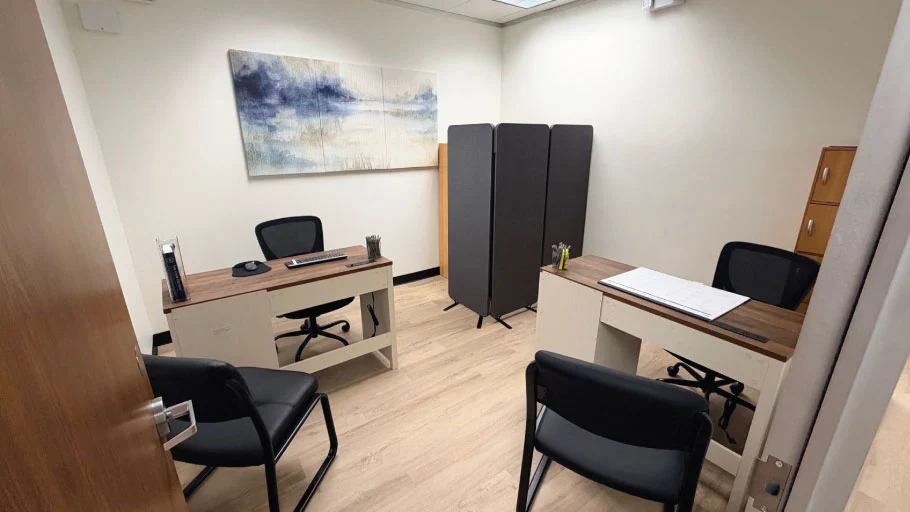
Most of the visit is a private, one-on-one conversation about what’s been happening and how it’s affecting your daily life. You can ask your own questions too, about schedules, costs, or anything else on your mind.

Leaving with a Plan
Before you go, you’ll know which program our team thinks fits best and what comes next, whether that’s a start date or a follow-up call. The decision about when to begin stays yours.
Being honest about substance use isn’t always easy, especially with someone you’ve just met. You can share as much as you're comfortable with and add more as trust builds.
A first visit is a conversation, not a commitment. Call us or send a message to schedule yours, and we’ll set a time that suits your schedule.
Which Level of Support Fits Around Your Job or Classes?
Most people who come to our Houston center are balancing treatment with a job, classes, or caregiving, and the right program depends on how much of your week you can give to it. Sessions run during the day or in the evening, and many people move from one program to the next as they progress.
Each option at Care for All Recovery Center asks for a different share of your week:
Partial hospitalization takes up most of your day on most weekdays, which usually means stepping back from work for a while. It suits people who need a high level of structure but don’t need to stay overnight.
Intensive outpatient care meets for a few hours on several days each week. Many people keep working or studying while they attend.
Outpatient care usually means one or two sessions a week, so it fits around a full-time schedule. People often use it to keep their progress steady after PHP or IOP.
When depression, anxiety, or trauma is part of the picture, mental health treatment happens alongside substance use care. It’s built into whichever program you attend rather than added as a separate set of appointments.
Each program treats substance use disorder involving alcohol, opioids, heroin, fentanyl, prescription drugs, benzodiazepines, meth, cocaine, and 7-OH.
The program you start in doesn’t have to be the one you finish in. Talk to our admissions team today to check which programs have openings right now.

What Do Local Numbers Show About Substance Use?
Substance use touches more families in this county than many people realize. A Harris County Public Health analysis found that substance-involved deaths in the county rose 72.7% between 2018 and 2022, reaching 1,162 in 2022. Emergency room visits involving substances more than tripled over the same period.
Numbers like these can feel heavy, but they also show why reaching out early matters. Substance use disorder is a treatable condition, and outpatient care gives you structured support while the rest of life keeps moving.
Send us a message now to ask what starting treatment would involve for you.
How Does Staying Near Home Help Your Recovery?
Recovery doesn’t only happen in a therapy room. It happens on the way home after a hard session, at the dinner table, and in the moments when an old habit tries to pull you back. For people who live in Houston, getting care in the same city where you work and spend your days turns those moments into part of the work rather than something you face alone later.
Outpatient care lets you put new skills to use right away. You might talk about a trigger in group one day, run into it at home the next, and bring what happened back to your counselor at your following session. That steady loop between treatment and real life is hard to recreate when care happens far from your everyday routine.
Staying close to home also keeps the people who matter within reach. Family and friends can remain part of your support, and you don’t have to rebuild your life from scratch once a program ends.
Healing where you live means the progress you make is already woven into your daily life. Give us a call today to ask how outpatient treatment could work alongside your family and work commitments.
Does Your Health Plan Cover Outpatient Care?
Many health plans include benefits for substance use treatment, but what’s covered depends on your plan, the level of care you need, and sometimes your deductible. Checking ahead of time means you won’t be guessing about costs when you start.
Check your coverage online now, and our team will get back to you with the details.
Which Questions Come Up Most Before Starting Care?
How soon can you start after reaching out?
It depends on which program fits and what openings are available at the time. After your first call, we’ll set up a visit to learn about your situation and check your coverage. Once those pieces are in place, you’ll get a start date and know exactly what your first week involves.
Are evening sessions available at the Houston center?
Yes. Our center offers both day and evening sessions, which can make treatment easier to manage if you work or attend classes during the day. Available times vary by program and current openings, so ask about the schedule when you call and we’ll tell you what’s open.
What if you’re not sure your use counts as a substance use disorder?
You don’t need a diagnosis before contacting us.
Using more than you planned, struggling to cut back, or seeing your use affect work or relationships are all reasons to ask. Your first conversation helps clarify what’s going on, and there’s no obligation to start a program afterward.
Can a family member call on your behalf?
Yes. A parent, partner, or friend can call to ask questions and learn how our programs work. Treatment information is protected by privacy laws, though, so we’ll need your permission before sharing anything about your own care. Choosing to begin treatment stays your decision.
Can you move between programs without changing locations?
Yes. PHP, IOP, OP, and Dual Diagnosis Care all take place at our one location, so stepping up or down doesn’t mean switching providers or getting used to a new building. Your team reviews your progress along the way and adjusts your level of care as your needs change.
What Would Make Today the Day You Ask for Help?
Asking for help is often the hardest part, and it doesn’t have to happen all at once. Enter your name and the best way to reach you, and someone from our Houston team will get in touch to plan your first visit.
Whether you live close by or in one of the nearby communities we serve, there’s a place for you here.
One small step today can open the door to steadier days ahead.